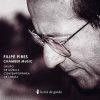

Descrição
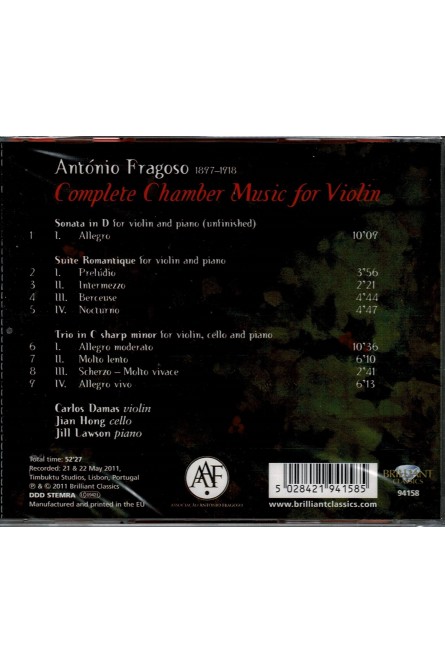
| Carlos Damas – violin
Jian Hong – cello Jill Lawson – piano
The death of António Fragoso (1897-1918) at the age of 21 deprived the Iberian Peninsula of a composer of great potential, the second within a century, after the Spaniard Juan Arriaga, who died at the age of 20 in 1826. having shown extraordinary promise. Fragoso, from Portugal, is less known than Arriaga, but the music on this CD reveals a young composer fully aware of the leading musical figures of the time; The influence of Debussy and Fauré, for example, can be detected in the 1916 Suite Romantique for violin and piano. The Trio, also from 1916, begins as a more formal work, but reveals the composer’s unique voice in the finale, where a series of chromatic progressions and an exploitation of the piano’s lower register create a dramatic sense of weight and timelessness. Also included on this recording, the 1917 Violin Sonata has survived as the opening movement only, and displays many of the trio’s characteristics, particularly through its affirmative and memorable melodic style. This CD offers the opportunity to discover the music of one of the could-have-beens of classical music. Fragoso’s tragically short life deprived Portugal of a composer with the potential for greatness.
1. António de Lima Fragoso: Sonata in D for violin and piano (unfinished): I. Allegro
2. António de Lima Fragoso: Suite Romantique for violin and piano: I. Prelúdio
3. António de Lima Fragoso: Suite Romantique for violin and piano: II. Intermezzo
4. António de Lima Fragoso: Suite Romantique for violin and piano: III. Berceuse
5. António de Lima Fragoso: Suite Romantique for violin and piano: IV. Nocturno
6. António de Lima Fragoso: Trio in C sharp Minor for violin, cello and piano: I. Allegro moderato
7. António de Lima Fragoso: Trio in C sharp Minor for violin, cello and piano: II. Molto lento
8. António de Lima Fragoso: Trio in C sharp Minor for violin, cello and piano: III. Scherzo – Molto vivace
|
António de Lima Fragoso: Trio in C sharp Minor for violin, cello and piano: IV. Allegro vivo
Informação adicional
| Peso | 150 g |
|---|---|
| Compositor | |
| Instrumento | |
| Tipo | |
| Tipologia | |
| Ano | 2011 |
Autor
António Fragoso (1897-1918)
Saiba maisProdutos Relacionados



Mais vendidosVer mais